
Psychological Considerations for LGBTQ+ Athletes in Sport: Navigating Identity, Performance, and Belonging
Dan Lockwood
2/3/20267 min read
As sport and exercise psychologists, we have a critical role to play in supporting LGBTQ+ athletes through the unique psychological challenges they face. Recent events in both hockey and football highlight why this work matters more than ever.
The Current Landscape: Two Contrasting Stories
The past few weeks have brought LGBTQ+ inclusion in sport back into sharp focus through two very different narratives that illuminate the psychological terrain LGBTQ+ athletes must navigate.
The Fife Flyers Controversy: When Symbolic Support Falls Short
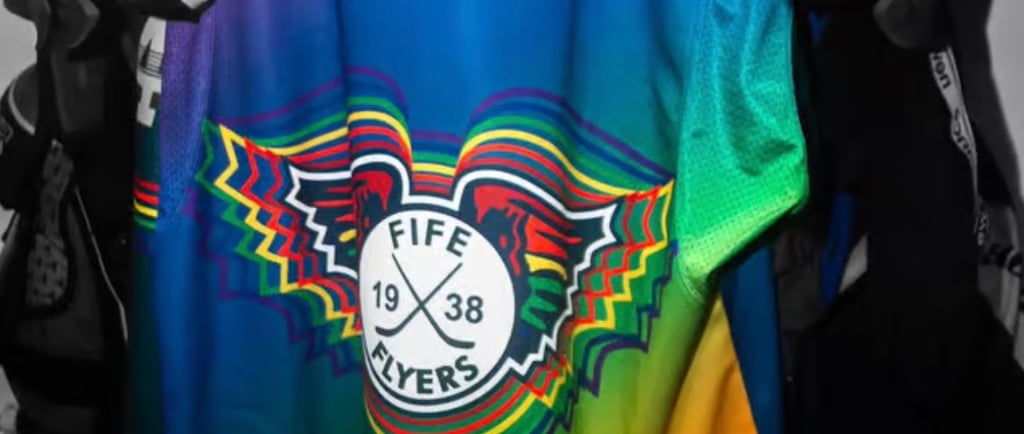
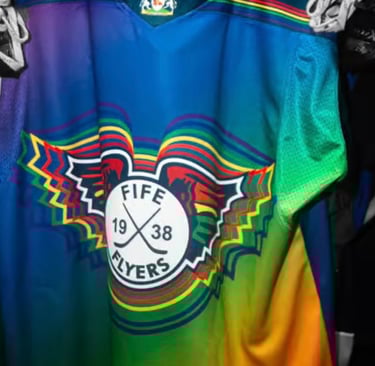
On January 31st, 2026, Scotland's Fife Flyers ice hockey team made headlines for abandoning their Pride jerseys during their annual Pride Night match. After announcing they would wear specially designed rainbow jerseys for the game against Guildford Flames, the team reversed course at the last minute, citing the need to "respect the diversity of backgrounds and personal beliefs within our playing group." The jerseys were worn only during warm-up before players changed into standard uniforms for the actual match.
The response was swift and severe. The Hive Kirkcaldy, the local LGBTQ+ charity the event was meant to support, walked out of the arena and refused all donations from the club. One player notably missed the warm-up entirely, and the club's attempt to compromise satisfied no one, fans were outraged, the LGBTQ+ community felt betrayed, and the intended message of inclusion was completely undermined.
Joshua Cavallo: The Weight of Being First
Australian footballer Joshua Cavallo made history in October 2021 when he became the first openly gay male player in top-flight professional football. His coming-out video was celebrated, with messages of support pouring in from football legends, fans, and the LGBTQ+ community worldwide. He described having "never smiled so much" and having "the best night's sleep" after his announcement.
However, the reality that followed has been far more complex. In March 2025, Cavallo revealed he receives multiple death threats daily and described the environment as "toxic." More recently, in January 2026, after failing to make a single appearance during the 2024-25 season with Adelaide United, Cavallo made an allegation, he claimed his departure from the club was due to "internal homophobia," stating that teammates mocked images of him and his partner in group chats and that management blocked his opportunities "not because of my talent, but because of who I choose to love."
For the first time since coming out, Cavallo questioned whether he had made the right decision. "I actually questioned if I should have kept my sexuality a secret," he wrote. "This brought up fears I had about coming out publicly, that being myself would affect my career."
Understanding the Psychological Landscape
These stories aren't just about sport, they're about the psychological burden LGBTQ+ athletes carry. As sport psychologists, we need to understand the specific challenges our LGBTQ+ clients face:
1. Identity Concealment and Compartmentalisation
Many LGBTQ+ athletes spend years living what Cavallo described as a "double life." The psychological cost of concealment is well-documented: increased anxiety, depression, reduced self-esteem, and constant hypervigilance about inadvertently revealing one's identity. Athletes may avoid social situations with teammates, censor their language, and maintain fabrications about their lives.
Psychological implications:
Cognitive load from constant monitoring
Inability to form authentic relationships with teammates
Stress and its impact on recovery and performance
Identity fragmentation that prevents wholeness
2. Minority Stress in Athletic Environments
Minority stress theory helps us understand the unique stressors LGBTQ+ athletes face. Beyond general life stressors, they experience:
Distal stressors: External events like discrimination, or harassment (the death threats Cavallo receives daily)
Proximal stressors: Internal processes like expectation of rejection, concealment efforts, and internalised homophobia
Chronic strain: The burden of navigating a heteronormative sporting culture
The Fife Flyers situation exemplifies how even well-intentioned gestures can fail when they're not backed by genuine commitment, creating additional stress about trusting organisational support.
3. Performance Under Threat
When athletes question whether their identity will cost them playing time, endorsements, or team selection, as Cavallo states, performance anxiety takes on an additional dimension. It's no longer just about executing skills, it's about whether being yourself will be held against you.
This creates a unique form of stereotype threat where athletes may:
Second-guess coaching decisions as potentially discriminatory
Experience heightened self-consciousness during performance
Struggle with motivation when meritocracy feels compromised
Question their place and value within the team structure
4. Social Isolation and Belonging Uncertainty
Sport is fundamentally about belonging, to a team, a community, a shared goal. LGBTQ+ athletes often exist in a space where they are unsure whether they truly belong or are just tolerated. When Cavallo discovered teammates were mocking images of him and his partner, it removed the sense of psychological safety that's essential for team cohesion and personal wellbeing.
The psychological concept of belongingness uncertainty is particularly relevant here, the questioning of whether one is truly accepted could lead to:
Vigilance to cues of rejection
Reduced engagement with team culture
Difficulty trusting teammates and coaches
Impaired performance due to divided attention
5. Being First
Being "first" or being visible as an LGBTQ+ athlete comes with unique pressures. Cavallo experienced this, the global attention, the role model strain, the media requests, and the expectation to be an advocate while simply trying to play football. This could include other difficulties for an athlete, such as:
Pressure to be a perfect representative
Loss of privacy and normal experiences
Heightened scrutiny of behaviour and performance
Responsibility for others' coming, out decisions
Practical Psychological Support Strategies
As sport and exercise psychologists, here's how we can better support LGBTQ+ athletes:
Assessment and Building Trust
Begin by creating explicitly affirming spaces. Use inclusive language in intake forms and initial consultations. Don't assume heterosexuality. Ask open-ended questions about support systems and whether there are aspects of their identity they feel unable to bring to sport.
Assess for minority stress specifically:
What fears or concerns do they have about their identity in sport?
Have they experienced discrimination or microaggressions?
What support systems do they have access to?
How much energy goes into concealment or managing others' perceptions?
Addressing Concealment vs. Disclosure
This is perhaps the most complex decision LGBTQ+ athletes face. Cavallo's experience shows us that disclosure can bring both relief and new challenges. Our role isn't to push athletes toward coming out, but to help them:
Clarify their own values and what authenticity means to them
Assess the realistic risks and benefits in their specific context
Develop coping strategies for whatever decision they make
Aid in the processing of what comes with feeling they must choose between their identity and their sport
Some athletes will never come out publicly, and that's valid. Others, like Cavallo, will choose visibility despite the costs. Both decisions deserve support.
Building Psychological Resilience
Given the reality that LGBTQ+ athletes face additional stressors, resilience-building is essential:
Cognitive strategies:
Identifying and challenging internalised homophobia
Separating performance feedback from identity-based discrimination
Developing realistic expectations about others' reactions
Building a narrative that integrates athletic and LGBTQ+ identities
Emotional regulation:
Processing grief, anger, and frustration about discrimination
Managing anxiety about rejection or career consequences
Maintaining self-compassion when facing hostility
Social support:
Connecting with LGBTQ+ athlete networks and role models
Identifying affirming individuals within their sport context
Building support systems outside of sport
Use of online communities when local support is limited
Teams and Organisations
The Fife Flyers controversy demonstrates that superficial gestures aren't enough. When organisations claim commitment to inclusion but fail to address player "beliefs" that exclude LGBTQ+ people.
The Broader Conversation
The contrast between the Fife Flyers' hollow gesture and Cavallo's lived experience points to a truth, LGBTQ+ inclusion cannot be performative. Rainbow jerseys mean nothing if players can opt out based on "beliefs" that fundamentally reject LGBTQ+ people's humanity. Pride events ring empty when athletes face threats, workplace discrimination, and social isolation.
As Fife Pride stated in response to the Flyers controversy, "Pride is not a warm-up. Pride is not optional. And Pride is not something that should be compromised to accommodate 'personal beliefs.'"
This matters psychologically because LGBTQ+ athletes are attuned to authenticity versus performance. They've spent years managing others' perceptions. They can tell the difference between genuine support and box-ticking.
The Question of Progress
Cavallo's story is particularly difficult. Here was an athlete who did everything "right", came out thoughtfully, received support, maintained professionalism, and yet still faced what he describes as homophobia that he feels derailed his career. His questioning of whether he should have stayed closeted is an example of how far we still have to go.
Yet he also represents hope. Despite everything, Cavallo has found love, gotten engaged, and recently relocated to the UK to continue his career with Stamford AFC. He's stated that this fresh start has made him "fall in love with football again." His resilience, supported by his partner, family, friends like Thomas Beattie, and LGBTQ+ community, demonstrates that while the challenges are real, so is the possibility of thriving in sport.
Our Role as Practitioners
The psychological considerations for LGBTQ+ athletes are complex, ongoing, and require specialised understanding. Here's what we can do:
1. Educate ourselves. LGBTQ+ experiences are diverse. Don't rely on athletes to educate you. Seek out training, read LGBTQ+ sport psychology literature, and engage with LGBTQ+ communities.
2. Create explicitly affirming practices. Don't assume heterosexuality. Use inclusive language. Display visual cues of allyship. Make it clear your practice is a safe space.
3. Advocate systemically. Individual support isn't enough. Work with organisations to create genuinely inclusive cultures. Consult on education, and accountability.
4. Support athlete agency. Whether athletes choose disclosure or concealment, public advocacy or private authenticity, centre their autonomy and wellbeing.
5. Recognise intersectionality. LGBTQ+ athletes have multiple identities, race, gender, class, disability status, that intersect to create unique experiences and challenges.
6. Acknowledge limitations. We can't fix sporting culture alone. Be honest about this while maintaining hope and commitment to change.
7. Celebrate progress and resilience. LGBTQ+ athletes show extraordinary courage. Witnessing and honouring this is part of our therapeutic work.
Conclusion
The recent experiences of the Fife Flyers and Joshua Cavallo display a difficult truth: being an LGBTQ+ athlete remains psychologically demanding in ways that their heterosexual peers don't experience. The weight of concealment, the burden of visibility, the constant assessment of safety, the questioning of whether one's identity will cost opportunities, these aren't abstract concepts. They're daily realities with concrete psychological and performance costs.
The promise of authenticity is that it allows integration, wholeness, and the freedom to bring one's true self to sport. But that is only realised when sporting cultures genuinely embrace LGBTQ+ athletes, not just during Pride month, not just when cameras are on, but in the daily interactions, selection decisions, and locker room conversations that make up athletic life.
As sport and exercise psychologists, we have a responsibility to support LGBTQ+ athletes through these challenges while simultaneously working to change the cultures that create them. We must be willing to have difficult conversations about "beliefs" that exclude, organisations that perform inclusion without embodying it, and the very real costs that pioneers like Joshua Cavallo continue to pay.